01
Events

Events
What PSTM 2026 revealed about the systems, talent and patient journey strategies that the most successful aesthetic practices will need by 2030.
Posted on October 22, 2026
I did not make it into a single session at Plastic Surgery The Meeting 2026.
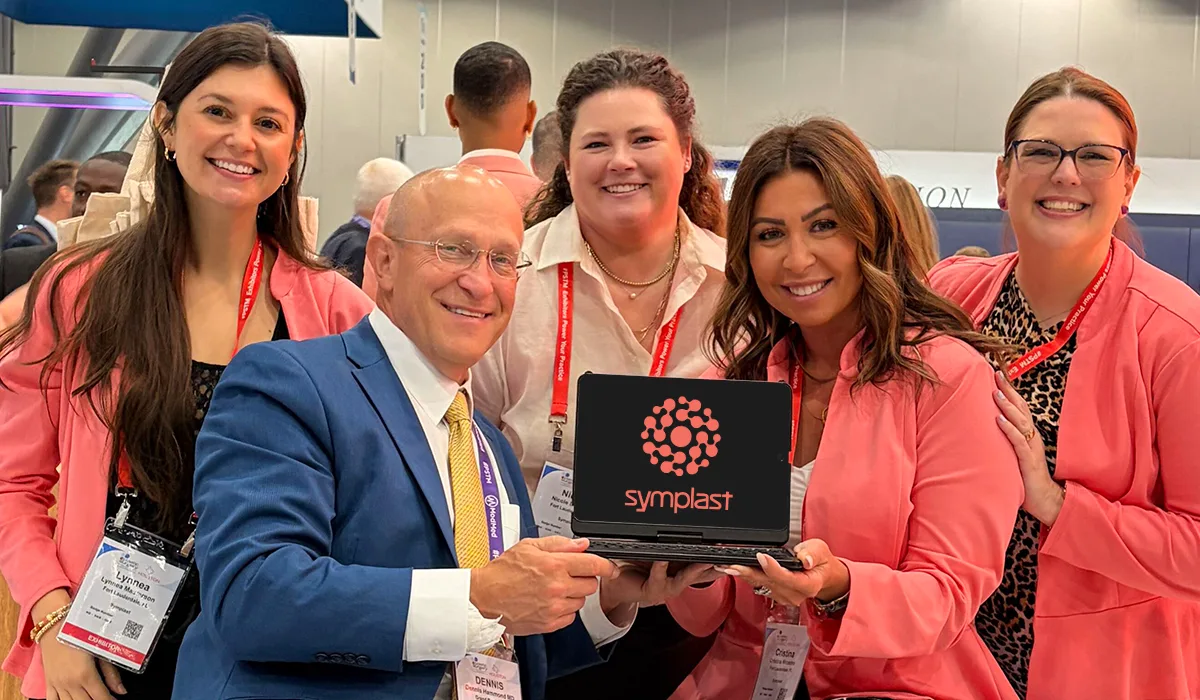
Compelling conversations kept me rooted to the spot at the Symplast booth, where I talked with more than 40 surgeons and professionals in medical aesthetics.
That turned out to be its own kind of education.
The practices were very different. Some were focused on growth, others on efficiency, talent, margins, or making the business less dependent on the owner. But the same themes kept coming back.
They left me thinking about what the most successful aesthetic practices will have figured out by 2030, and what practices should be looking at now if they want to be among them.
One conversation was with the CEO of a group of about ten plastic surgery practices. Everything he said came back to integrated systems, data, and clear processes.
His concern was his people becoming the IT glue holding the practice together: copying leads between systems, re-entering information already in the chart, or remembering steps the technology cannot handle because two tools do not talk to each other.
Running ten practices, he is right to worry about it.
That is not just a ten-location problem. I see it in smaller practices all the time. Scale simply makes the cracks easier to see.
In a smaller practice, a great employee can compensate for disconnected technology for years. The business looks like it works because someone behind the scenes is quietly making it work.
That gets fragile quickly when volume increases or that person leaves.
The successful practices of 2030 will not depend on people to bridge their systems. Information will move with the patient, and the team will spend less time transferring it and more time using it.
If someone on your team is still acting as the glue today, pay attention to that. There are far higher and better uses of their time. Speaking of…
Another conversation at PSTM was about one of the hardest seats in an aesthetic practice to fill: the patient care coordinator.
Good coordinators know their value.
They understand patients. They understand sales. They understand the practice. And they know the difference between working somewhere technology helps them perform and somewhere they spend their day fighting the tools.
We tend to think about software decisions as operational decisions.
They are also employee-experience decisions.
If your best people have to re-enter information, chase down context, manage workarounds, or compensate for disconnected processes, that becomes part of the job you are asking them to do.
The most successful practices in 2030 will understand that their technology environment is part of their talent strategy.
They will give good people systems that make them better at their jobs, not systems they have to overcome.
That matters now, especially if you are already competing for coordinators, front-desk staff, managers, nurses, and other high-value team members.
One of our clients at PSTM was considering a CRM that cost less than what he had. The problem was that it did not integrate with his practice management system and EHR.
He saw the tradeoff quickly.
The software might cost less, but somebody on his team would have to reconnect the patient journey manually. That expense never appears on the invoice.
And every disconnected handoff creates another opportunity to lose something: the lead, the context, the follow-up, the next treatment opportunity, or simply the feeling that the practice remembers the patient.
Aesthetic medicine is not a series of isolated transactions. A surgical patient may return for injectables, skin care, another procedure years later and refer friends and family along the way.
The most successful practices in 2030 will see and manage that entire relationship.
They will know where the patient has been, where they are now and what should happen next. The experience will feel connected from the patient’s side too.
That is what I mean when I say the practices that master the patient journey will win in aesthetics.
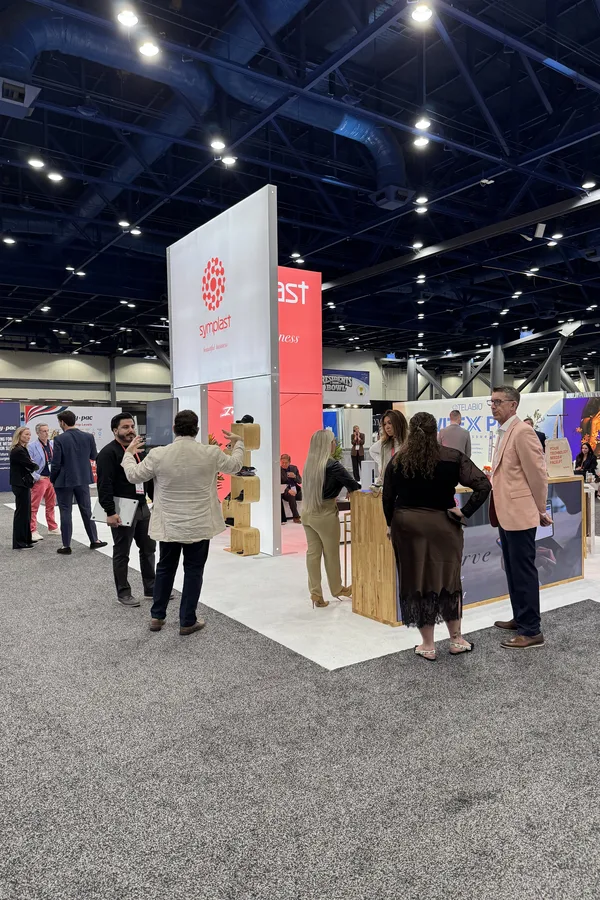

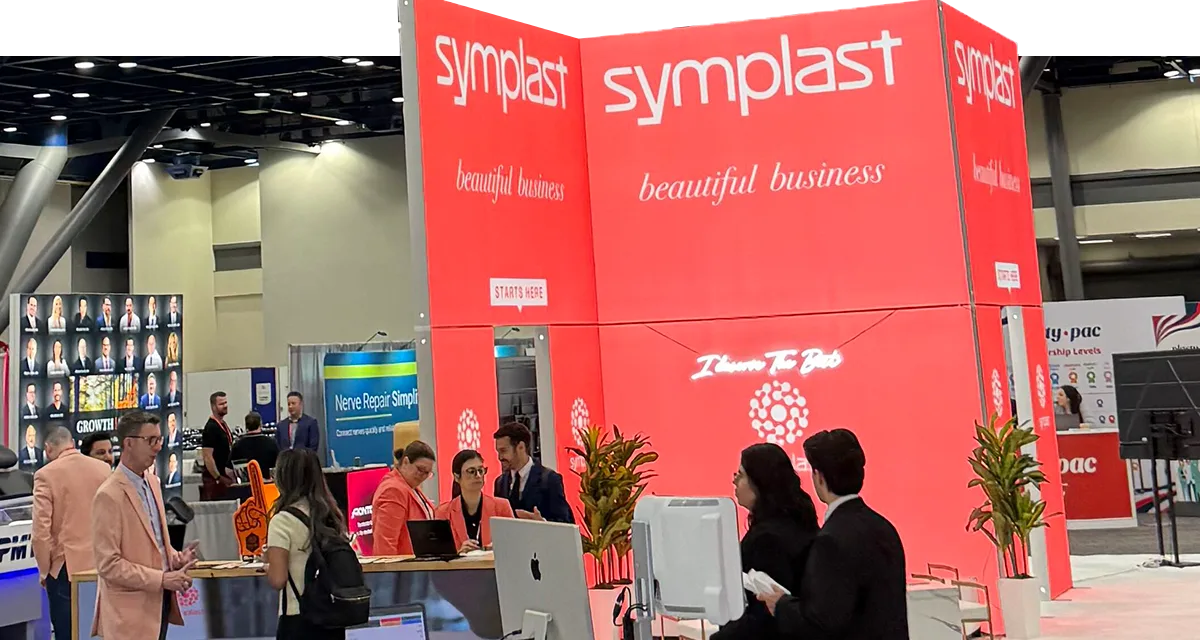
Conversations on the PSTM 2026 exhibit floor, at the Symplast booth and in the aisles.
When I looked through the PSTM Practice Management program, the sessions covered many of the individual jobs required to run a successful practice: marketing, AI, patient experience, teams, operations, risk, and more. All important.
But the conversations on the conference floor kept coming back to a bigger question:
How do you make all of those things work together as one business?
That is what we mean at Symplast when we talk about building a Beautiful Business.
Dr. Douglas Steinbrech put it well when he joined me for our Beautiful Business series: “The medicine is the easy part. The tough part is making sure that everything stays a well-oiled machine.”
“The medicine is the easy part. The tough part is making sure that everything stays a well-oiled machine, that you’re always innovating, always growing, and that you have good people around you.”
Dr. Douglas Steinbrech, M.D., F.A.C.S., Plastic Surgeon & Board Member, The Aesthetic Society
Almost every conversation I had at PSTM was about that tough part.
And that is why those conversations matter to me.
You can learn a lot about where an industry is going by listening to what its best operators are trying to solve today. Their challenges change as they grow. Their expectations of technology change with them. The companies that serve them have to keep changing too.
I do not think our job at Symplast is to tell practices what they will need five years from now. It is to stay close enough to see where they are going, understand what is getting in their way, and keep building ahead of those needs.
The future of aesthetic medicine will not be defined by one feature, system, or trend. It will be shaped by the practices that figure out how to make the whole business work together.
And the signs of who is going to get there first are already showing.
Big thanks to our partners CareCredit and ImageAssist who helped shape our booth’s experience just as they are helping to shape Beautiful Business.
Stay tuned for big things with our friends at Vrtly.
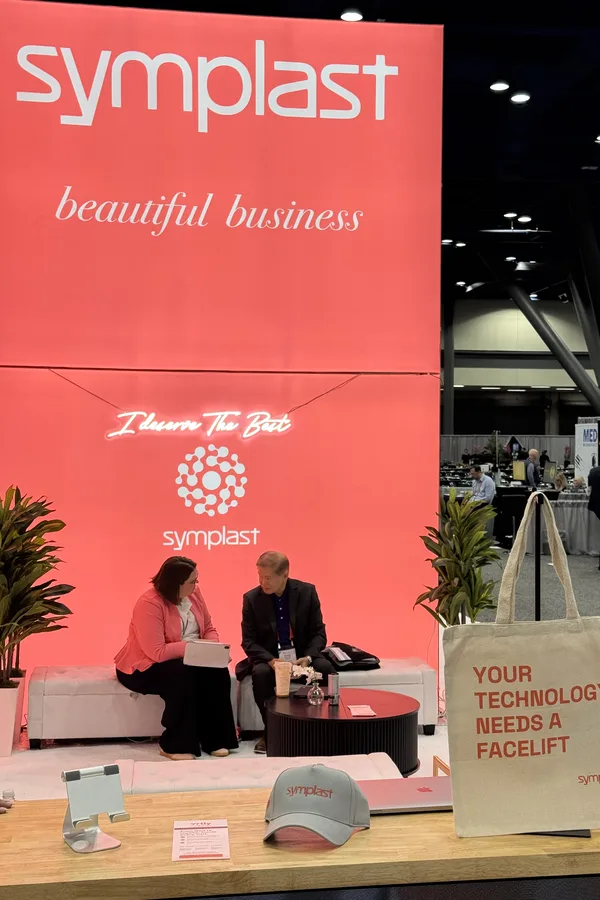
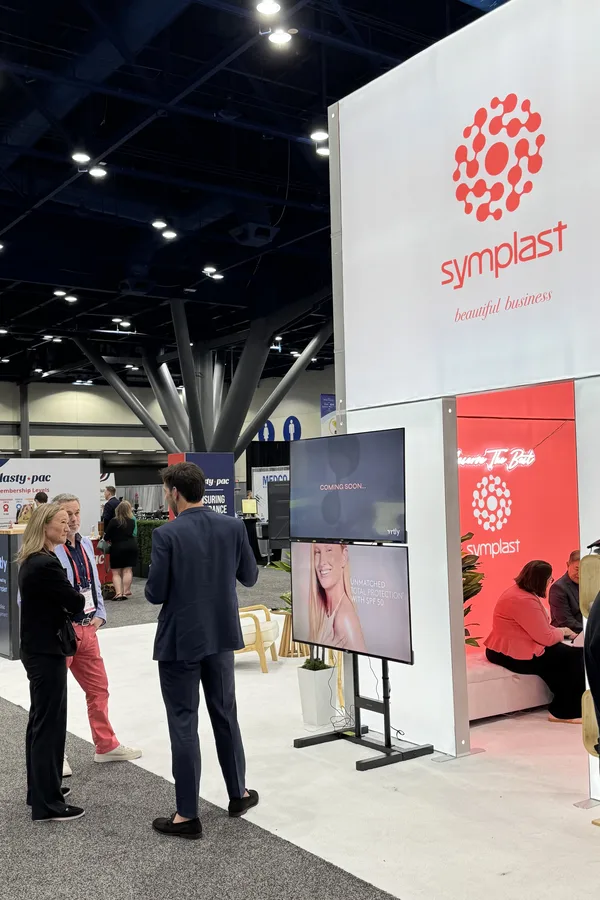
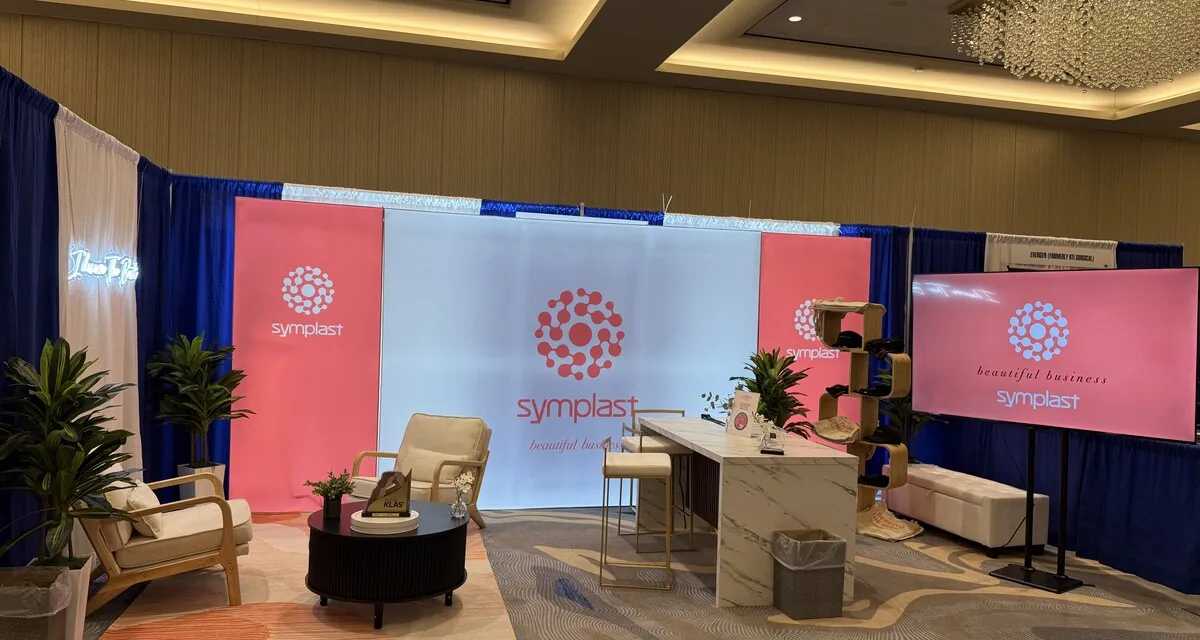
Left: the Symplast booth lounge. Right: Vrtly’s “coming soon” screen beside the booth.
Keep reading
Conversations with surgeons and practice leaders about the tough part: making the whole business work together.
Read the seriesThese preferences supplement our default experience. If you have accessibility needs we have not met, please reach out. Contact us at webmaster@symplast.com.
Preferences are stored on this device only.